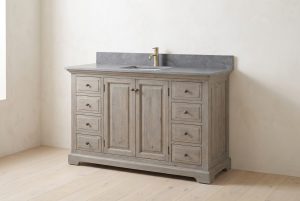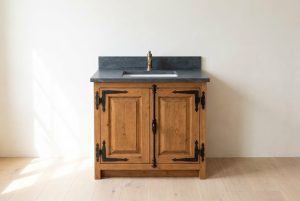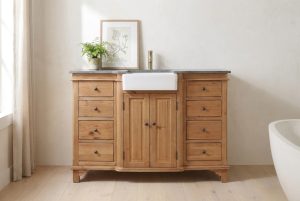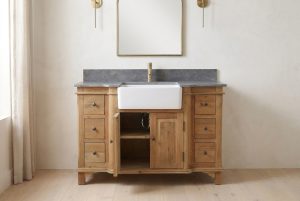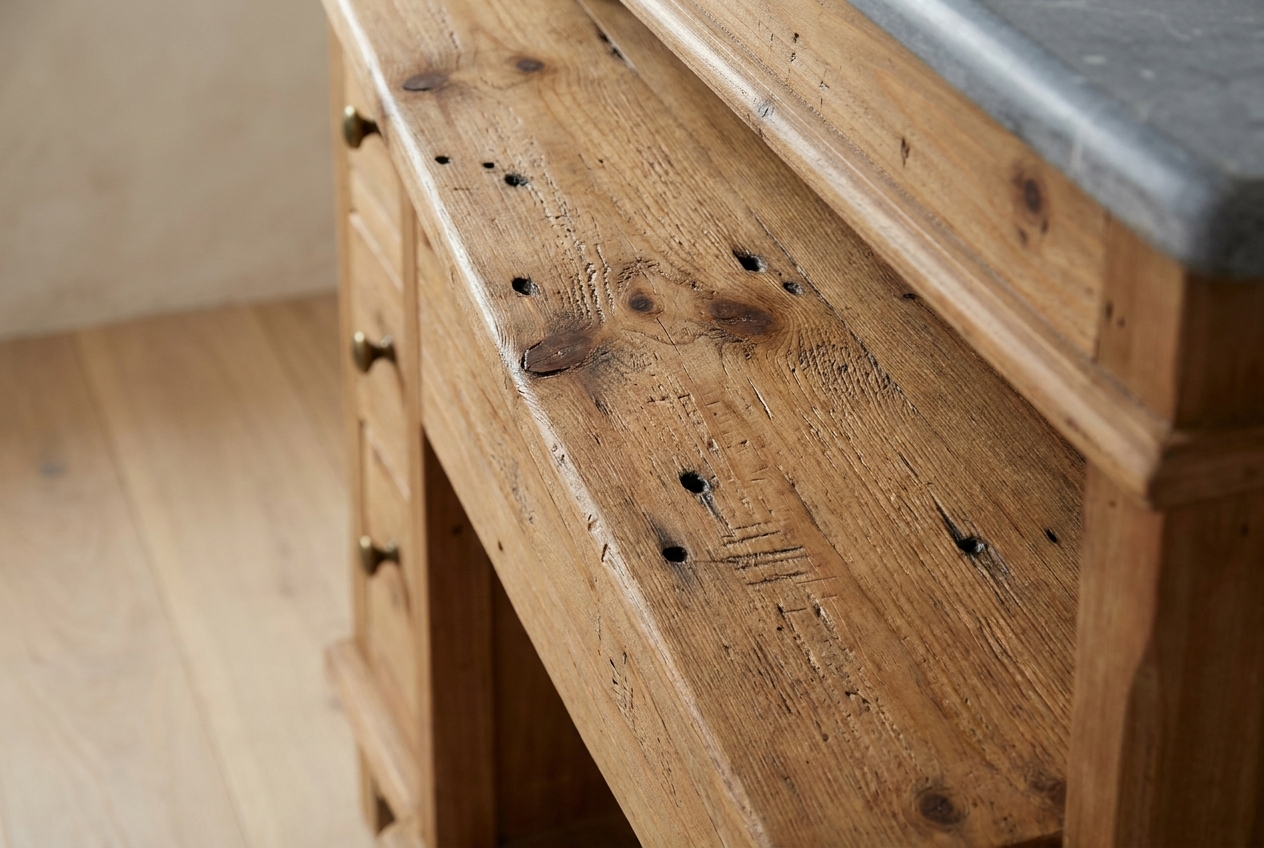

The best wood for a bathroom vanity is one that is solid, naturally aged, and finished for a working bathroom, and that is exactly why we design ours in reclaimed pine. Pine has a reputation as a soft wood, and for new pine that is fair. But aged reclaimed pine is a different material entirely, and it is at the heart of our collection. Here is why we chose it, and why it belongs in your bathroom.
Is reclaimed pine good for a bathroom vanity?
Yes. The thing that decides whether a vanity survives a bathroom is not the species name on a spec sheet, it is whether the wood is solid and properly finished. Our pine has the age and character of wood that has already spent decades expanding and contracting through seasons, which makes it unusually settled and stable, far more so than freshly milled lumber. A solid, well-finished pine vanity handles normal bathroom moisture without complaint. You can read more about how we work in our story.
Why we design our vanities in pine
Pine earns its place for three reasons that matter in a real bathroom:
- Character. Reclaimed pine carries knots, nail holes, saw marks, and color variation by design. It is the warmest and most characterful wood in our line, and it reads as genuinely old.
- Stability. Years of seasonal movement have already done their work, so the wood is settled and predictable by the time it becomes a vanity.
- A look that ages well. On pine, a small mark or a faint water ring reads as patina rather than as damage on something meant to look factory-perfect.
The 30-inch Davidson and the 36-inch Durham are both pine and show what the wood does in a finished piece.
Prefer a different wood? We can custom-make it
Pine is our standard, but it is not your only option. Because we work directly with our maker, we can custom-make a vanity in other woods, such as elm or oak, to suit what you are after. If you have a specific wood, size, or look in mind, get in touch and we can arrange a custom piece made to your needs rather than asking you to settle for what is on the shelf.
“Isn’t pine too soft?”
This is the honest question, so here is the honest answer. New pine is soft and dents easily. Reclaimed pine has spent decades drying and settling, so it is fully seasoned and far more stable, though still softer than a dense hardwood. It can take the occasional dent, but on a vanity that is a feature, not a flaw. The piece is meant to look lived-in and full of character, and the small marks it picks up over the years add to that, rather than ruining a flawless surface. If you want a vanity that looks untouched and machine-perfect, reclaimed wood of any kind is not what you are after. If you want character that deepens with use, pine is exactly right.
The construction matters as much as the wood
A vanity lasts because of how it is built, not just what it is built from. Whatever the wood, ours are made the traditional way:
- English dovetail drawers that stay square through years of use.
- Solid-wood interiors, not veneer over a pressed-board core that could swell.
- Tongue-and-groove construction that lets panels move slightly without splitting.
- Traditional mitered bases that keep the piece sitting true.
The pine sets the look and the warmth; the joinery is what makes it last. That combination is the whole point of a reclaimed-wood vanity, old soul, solid build.
Living with a reclaimed pine vanity
Caring for one is simple: wipe up standing water, especially around the sink, clean it gently, and keep the bathroom ventilated. The finish is the working surface, and treated with that small bit of common sense, a solid reclaimed pine vanity lasts for many years and looks better the longer you have it. To see the wood in finished pieces, browse the single-sink vanities or all of our vanities, and remember that because each piece is reclaimed, the exact grain and character vary from one vanity to the next.
Common questions about reclaimed pine vanities
Is reclaimed pine good for a bathroom vanity?
Yes. Solid reclaimed pine that has aged for a century is settled and stable, and finished as a working surface it handles normal bathroom moisture well. What matters most is that it is solid wood, reclaimed, and properly finished, not particleboard dressed up to look like wood.
Is pine too soft for a bathroom vanity?
New pine is soft. Reclaimed pine has spent decades drying and settling, so it is fully seasoned and far more stable, though still softer than a dense hardwood. It can still take the occasional dent, but on a reclaimed-wood vanity those small marks read as character on a board that already carries knots and saw marks. For a lived-in, characterful look, pine is a sound choice.
Will a reclaimed pine vanity hold up to moisture?
A solid, well-finished reclaimed pine vanity handles everyday bathroom humidity and splashes. Wipe up standing water, keep the room ventilated, and the finish does its job for years. The failures people fear come from particleboard cores, not from solid reclaimed wood.
What makes reclaimed pine different from new pine?
A century of seasonal movement and slow drying has already settled reclaimed pine, so it is drier, more stable, and carries the knots, nail holes, and color variation that give it character. New pine is softer, plainer, and has not been through that seasoning.
Designed in High Point, NC and made to our specifications. Not sure if reclaimed pine is right for your bathroom? You will not reach a call center. Call 336.471.0716 and you will reach Olivia directly, who can arrange a custom piece in the wood you want and personally handles everything from your first question to your delivery.