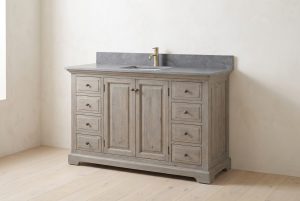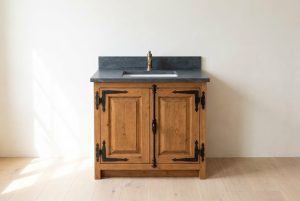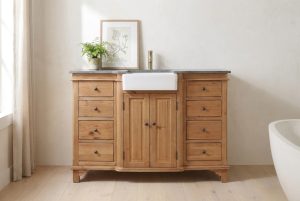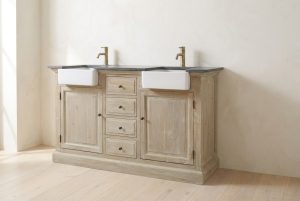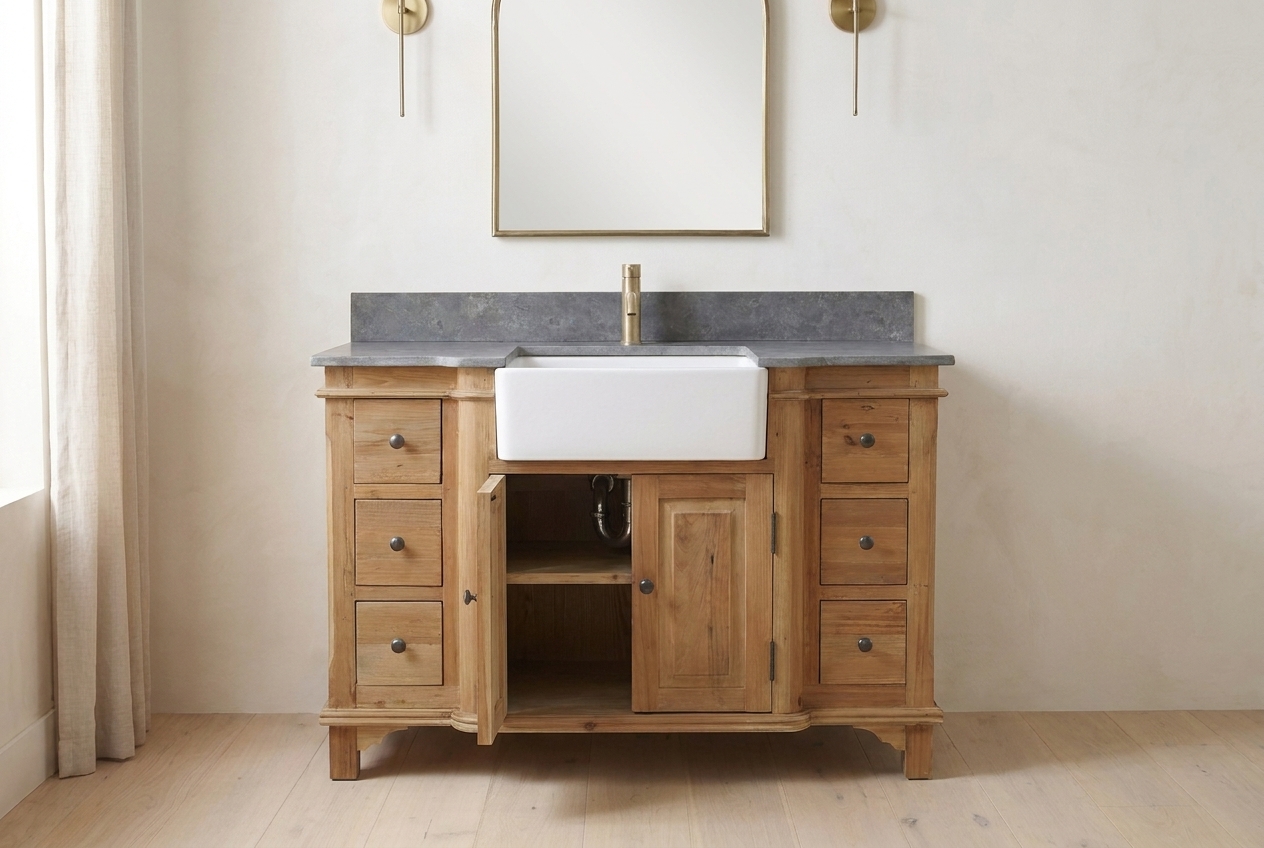

Reclaimed pine is the best wood for most bathroom vanities: it’s naturally aged, carries real character marks, and holds up in humidity when properly finished. Elm and oak are available by custom order if you want a different grain or tone. Here’s how all three compare, and what actually matters when choosing wood for a bathroom.
Contents
- Pine, elm, and oak at a glance
- Why we use reclaimed pine
- How the finish protects the wood
- What about elm and oak?
- Which wood should you choose?
- Frequently asked questions
Pine, Elm, and Oak at a Glance
| Reclaimed Pine | Reclaimed Elm | Reclaimed Oak | |
|---|---|---|---|
| Availability | Full collection, in stock | Custom order | Custom order |
| Look | Warm grain, pronounced knots, saw marks, nail holes | Interlocked grain, more varied color | Pronounced open grain, rich brown tone |
| Character marks | Heavy: this is the appeal | Moderate | Moderate |
| Finishes | Natural, Wash, or Waxed (varies by piece) | Discussed per order | Discussed per order |
| Lead time | Standard | Longer, contact us | Longer, contact us |
| Best for | Most bathrooms, most styles | A specific grain look pine can’t provide | A formal or traditional bathroom |
Why We Use Reclaimed Pine
Most guides to bathroom vanity materials will tell you to avoid pine. Soft, they say. Prone to denting. Not suited for a humid environment. That advice is sound if you’re talking about new-growth pine from a lumber yard, boards cut from young, fast-growing trees with wide, open grain that absorbs moisture readily.
It doesn’t apply to reclaimed pine.
The pine in our vanities was reclaimed from vintage barns and cabins, and from the flooring of former factories and mills, wood that is more than a hundred years old. That wood came from slow-grown, old-growth trees and then spent decades under foot traffic or holding up a roof. By the time it’s reclaimed and shaped into a vanity, it has dried completely and settled, with the tight grain old timber carries and the kind of natural character (knots, saw marks, nail holes, color variation from age) that new lumber cannot replicate on any timeline.
“The wood has aged naturally through the years and has its own unique character,” as Les Streeton, our co-founder, put it. That character is what you’re buying.
A pine vanity is not a maintenance-free object any more than a marble countertop is. The wood is finished; the stone top is sealed. Managed correctly, reclaimed pine holds up well in a working bathroom. We’ve designed more than a hundred vanities around it. That’s not a side note, it’s the product line.
If you want to understand how the material question fits into a bigger decision about construction quality, our post on solid wood vs. MDF bathroom vanities covers the comparison in detail.
How the Finish Protects the Wood
Wood survives in a bathroom based on how well it’s protected, not just which species it is. We offer three standard finishes on our reclaimed pine:
- Natural: a rich, medium-brown tone.
- Wash: a driftwood color with gray undertones.
- Waxed: a matte sheen that highlights the age marks and character in the wood.
Not every piece is offered in every finish, so check the product page for the options on the vanity you are considering.
All three act as a surface treatment for the wood. The bigger ongoing task is the stone countertop. Our vanity tops are natural stone, and natural stone benefits from periodic re-sealing to stay water-resistant. Bluestone tops take a granite sealant; white marble tops take a marble sealant. If your piece has a different stone top, such as the slate grey stone on some of our doubles, call Olivia and she will tell you which sealant fits. It’s straightforward maintenance, and keeping up with it is what keeps the vanity looking clean long-term.
For a step-by-step care routine, see how to seal and care for a reclaimed wood vanity.
What About Elm and Oak?
Elm and oak were part of our original line. They’re no longer stocked (reclaimed pine is what the collection is built around, and it’s what most buyers want), but because we work directly with the factory that produces our vanities, we can make a piece in another wood when that’s what you need.
Elm has an interlocked grain that makes it visually distinct from pine: more varied in color, smoother in face. If you want a specific grain pattern that pine doesn’t deliver, elm is worth a conversation.
Oak has a wide, pronounced grain and a rich, warm tone. It reads more formally than pine and suits a traditional bathroom particularly well.
Neither wood is a quick transaction. A piece in elm or oak takes longer to produce than a stock order. If you’re interested, get in touch and Olivia can walk you through what’s involved. You won’t reach a call center. You’ll reach her directly.
Which Wood Should You Choose?
For most bathrooms, reclaimed pine is the right answer. It’s what we’ve built the collection around, the three standard finishes cover a range of styles, and the character marks are what make a reclaimed vanity worth having in the first place.
Elm or oak makes sense when you have a specific grain or tone in mind that pine doesn’t offer, and you’re prepared to wait for a custom piece.
Either way, browse the full vanity collection to see what we’ve designed in pine. If you have a specific size in mind, the single-sink collection runs from roughly 24″ to 71″ wide.
Frequently Asked Questions
Is pine too soft for a bathroom vanity? New-growth pine is soft, and that criticism is fair. Reclaimed pine from old buildings is a different situation: slow-grown, naturally dried over decades, with a tighter grain. Properly finished and maintained, it holds up well in a working bathroom. The key is the finish on the wood and sealing the stone top, not the species.
Which finish is best for pine in a humid bathroom? All three finishes (Natural, Wash, and Waxed) work in humid conditions. The choice is mostly aesthetic. Wipe up standing water from the wood surface when you see it, and re-seal the stone countertop periodically. That’s the real maintenance routine.
Can I order a vanity in elm or oak? Yes, as a custom piece. We don’t stock elm or oak, but we work directly with our factory and can produce in either wood. Reach out and Olivia will walk you through the options and timeline.
Does the wood species change the price? Stock pieces are priced by size, design, and finish, all in reclaimed pine. A custom piece in another wood would be priced separately; contact us for details.
How do I know which finish will work in my bathroom? Natural suits warm, traditional, or farmhouse spaces. Wash fits coastal or contemporary bathrooms. Waxed gives a more muted, aged look that lets the grain speak. If you’re still deciding, call 336.471.0716. Olivia picks up and is glad to talk it through based on your actual bathroom.
Designed in High Point, NC and made to our specifications. Questions about wood, finish, fit, or shipping? Call 336.471.0716 and you’ll reach Olivia directly, who personally handles everything from your first question to your delivery.