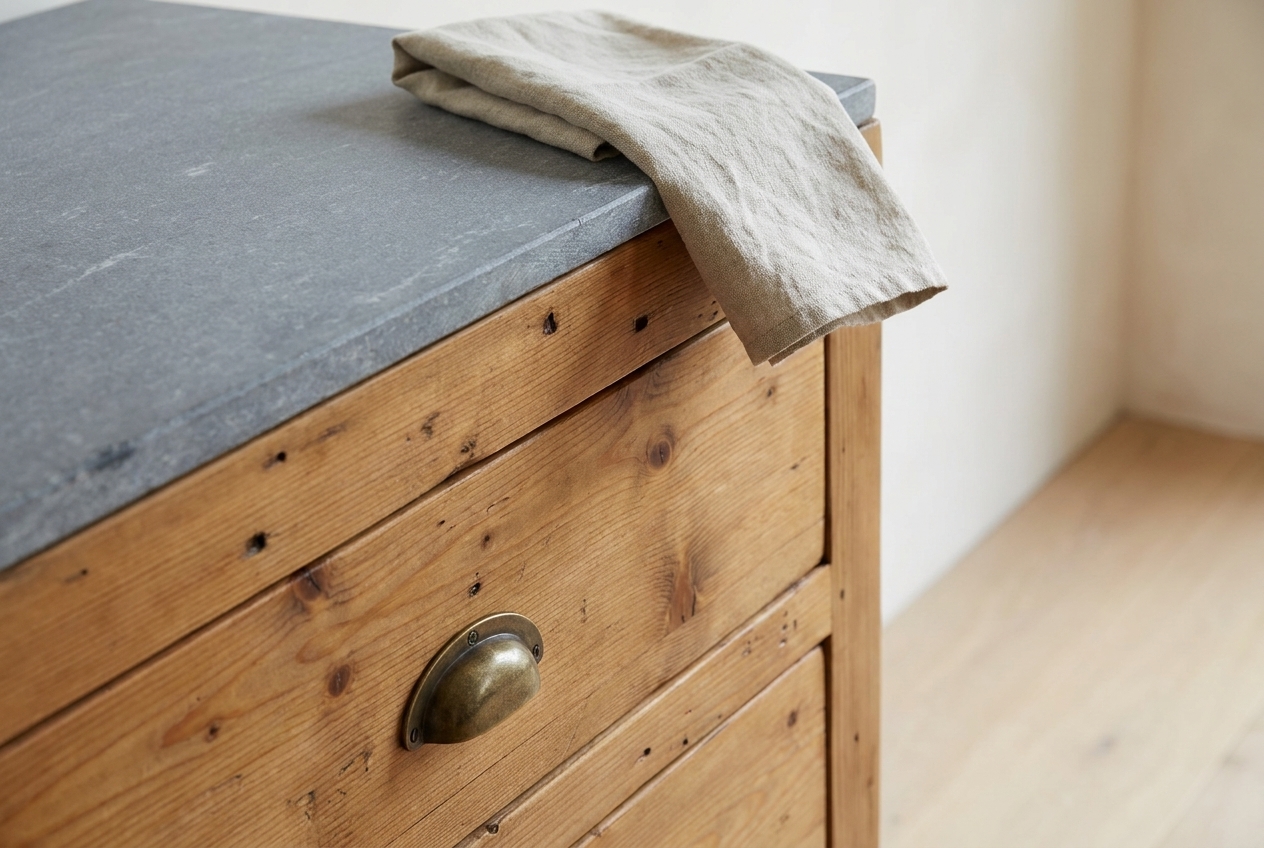

A reclaimed wood vanity is built to live in a bathroom, and keeping it looking right is mostly a matter of simple habits rather than special products. Wipe up standing water, clean it gently, and let the finish do its job. That is genuinely most of it. Here is the full version, including what to use, what to avoid, and how to handle the day-to-day so your vanity ages well instead of just aging.
Start with the easy daily habit
The single most useful thing you can do is wipe up standing water, especially around the sink and the base of the faucet. A finished wood surface handles splashes and the damp of normal bathroom use without trouble. What it does not love is water left sitting in a puddle for hours. A quick pass with a dry or barely damp cloth after the sink gets a workout is the whole routine, and it is enough to keep the top in good shape for years.
How to clean it without harming the finish
Gentle is the rule. The finish on the wood is the working surface, and harsh cleaners are the main thing that wears it down prematurely.
- Use a soft, damp cloth for everyday cleaning. Warm water alone handles most of it.
- For more, use a mild soap diluted in water, then wipe dry.
- Avoid abrasive pads and scouring powders. They scratch the finish and dull the surface.
- Skip harsh chemical cleaners, including ammonia-based glass cleaners and bleach sprays, on the wood. They can break down the finish over time.
- Wipe spills promptly, particularly toothpaste, soap, and anything left as a puddle.
None of this is fussy. It is the same gentle approach you would give a good wood table.
Understanding your finish
Reclaimed wood is finished so it can handle a working bathroom, and the finish is both the look and the protection. Our vanities are finished in a few ways, including:
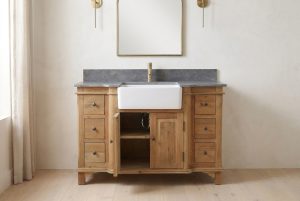
- Natural, a rich medium-brown.
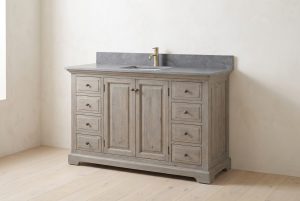
- Wash, a driftwood look with gray tones.
- Waxed, a matte sheen that highlights the wood’s age marks.
Whichever finish your piece has, treat it as the protective layer it is: clean it gently, keep standing water off it, and it will keep doing its job. If you ever want to know exactly how a specific piece is finished, just ask, which is one of the advantages of buying from a company that stands behind its pieces. There is more on how we work in our story.
Living with character marks
Reclaimed wood comes with knots, nail holes, saw marks, and color variation. These are part of the board, not flaws, and they are also forgiving. A faint water ring or a small mark reads as patina on wood that already carries a century of history, rather than as damage on something meant to look factory-perfect. That is part of why reclaimed wood is such a sensible choice for a bathroom: it ages gracefully because it is already aged. You do not need to baby it. You just need to be reasonable with it.
Sealing the stone top over time
The wood is only half of the surface. Most of our vanities have a natural stone top, and stone benefits from being re-sealed now and then to keep it looking fresh and to guard against water stains. It is simple periodic maintenance, not a chore:
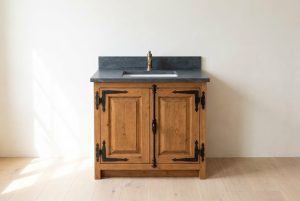
- Bluestone tops should be sealed with a granite sealant.
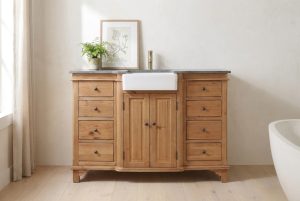
- White marble tops should be sealed with a marble sealant.
Reapplying the right sealant every so often keeps the stone looking fresh and helps guard against water stains and rings. Follow the sealant manufacturer’s directions for how often to reapply, since it varies by product and use.
A few things to avoid
To keep the finish looking its best for the long run:
- Do not leave wet items sitting on the top, like a soaked washcloth or a dripping bottle, for long stretches.
- Use a tray under soaps and lotions that tend to leak or drip.
- Keep the bathroom ventilated. Running the exhaust fan during and after a shower clears the steam that would otherwise settle on every surface, wood or not.
- Re-home harsh cleaners. Keep the bleach and abrasive sprays for the tile, not the wood.
Keeping it for the long haul
Cared for with these simple habits, a solid reclaimed wood vanity lasts many years and can be refreshed if it ever needs it, which is one of the real advantages of solid wood over pressed board. Treat the finish kindly, manage standing water, and the piece will look better over time, not worse. If you are still choosing, the single-sink vanities and the full vanity collection show the range, and the 30-inch Davidson is a good example of a solid reclaimed piece built to be lived with.
Common questions about caring for a reclaimed wood vanity
How do you protect a wood vanity from water damage?
Wipe up standing water promptly, especially around the sink and faucet, keep the bathroom ventilated so steam does not settle, and clean only with a soft cloth and mild soap. The finish handles everyday splashes; what wears it down is standing water left for hours and harsh chemical cleaners.
What should you not use to clean a wood bathroom vanity?
Avoid abrasive pads, scouring powders, and harsh chemical cleaners such as ammonia-based glass cleaners and bleach sprays, since they break down the finish over time. Warm water and a mild diluted soap, wiped dry, handle almost everything.
Do you need to reseal a reclaimed wood vanity?
Under normal bathroom use, a finished reclaimed vanity does not need frequent resealing; gentle cleaning and managing standing water keep the finish doing its job. One advantage of solid wood is that it can be refreshed or refinished down the road if it ever needs it, which pressed board cannot.
Will water rings and marks ruin a reclaimed wood vanity?
Not the way they would on a factory-perfect surface. On reclaimed wood that already carries knots, nail holes, and a century of marks, a faint ring reads as patina rather than damage, which is part of why reclaimed wood ages gracefully in a bathroom.
Do I need to seal the stone top?
Yes, re-sealing the stone over time keeps it looking fresh and helps prevent water stains. Use a granite sealant on a bluestone top and a marble sealant on a white marble top, and reapply periodically per the sealant’s directions. It is quick, occasional maintenance that keeps the top looking new.
Designed in High Point, NC and made to our specifications. Questions about caring for your finish, or which one suits your bathroom? Call 336.471.0716 and you will reach Olivia directly, who personally handles everything from your first question to your delivery.