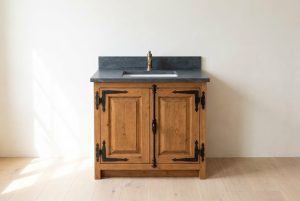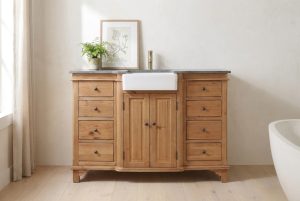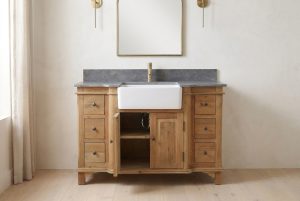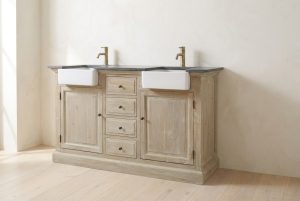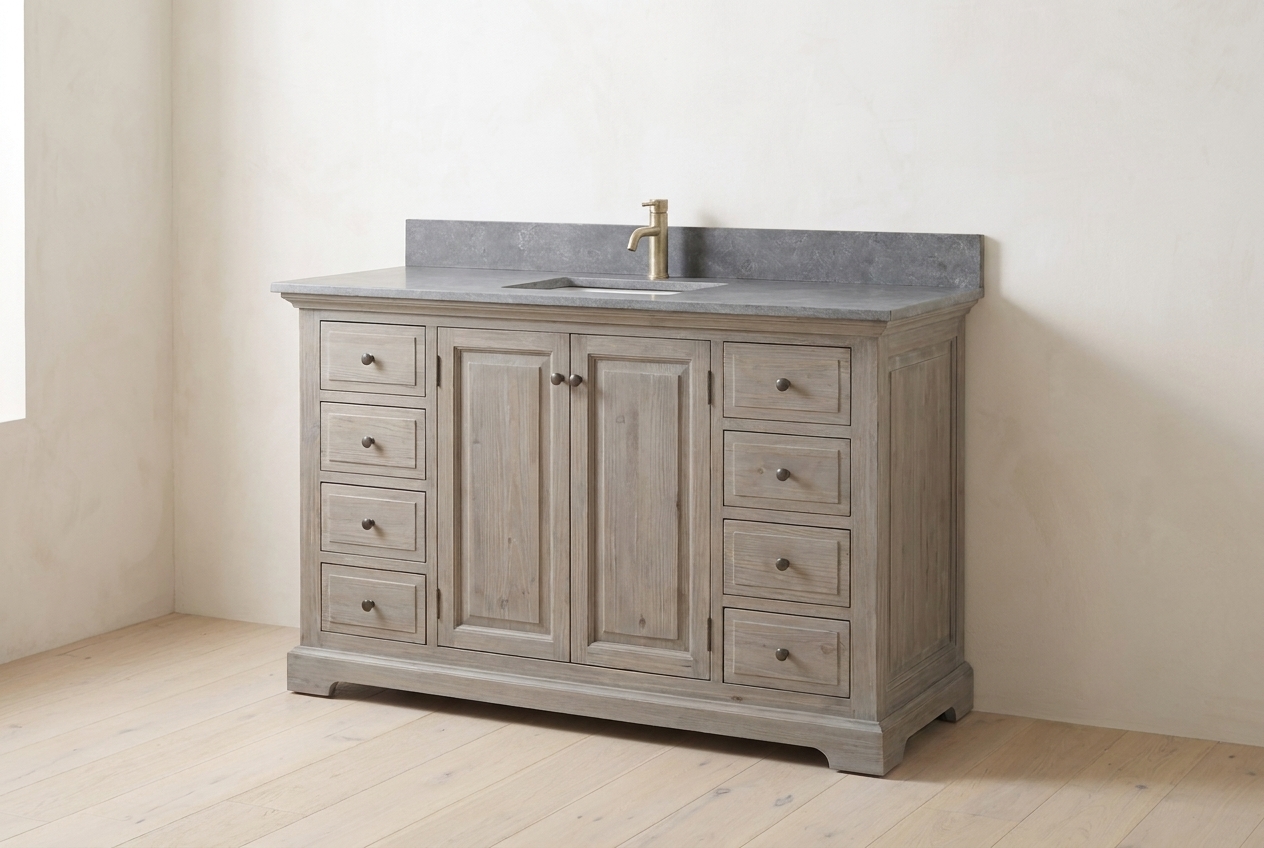

A well-built solid wood vanity can last for decades with basic care, and reclaimed wood starts with a head start. The boards are already a century old, which means they have done nearly all of their moving, shrinking, and settling long before they reach your bathroom. That is the short answer. The longer answer is that lifespan comes down to three things: what the cabinet is built from, how the top is looked after, and how you treat standing water. Here is how each one plays out, and why a piece that lasts decades quietly becomes one of the cheaper things in your bathroom by the year.
Why reclaimed wood is a durability advantage, not a risk
The worry people bring to reclaimed wood is that old means fragile. It is closer to the opposite. Wood moves the most when it is young and drying out. Timber reclaimed from century-old barns, cabins, factories, and mills has already lived through decades of seasonal humidity swings, so it is far more dimensionally stable than a freshly milled board. That stability is exactly what you want in a bathroom, which is the most humid room in the house.
The character that comes with age, the knots, nail holes, and saw marks, is surface history, not weakness. It is aged, solid wood doing its job.
What actually determines a vanity’s lifespan
Two vanities of the same age can be decades apart in how long they last, and it is almost always about construction. The things that make ours last:
- Solid wood, not particleboard. Our interiors are solid wood rather than veneer over particleboard. Particleboard is a leading reason budget vanities fail, because once it meets water at a chipped edge it swells and never recovers. We cover this in detail in our comparison of solid wood versus MDF vanities.
- English dovetail drawers. Dovetail joinery holds under daily open-and-close for years where stapled or glued corners work loose.
- Tongue-and-groove construction and a mitered base. Joinery that locks together instead of relying on fasteners is what keeps a cabinet square over time.
- A natural stone top. Stone outlasts a laminate or cultured top, and periodic sealing keeps it looking fresh through years of daily use.
The part most people forget: sealing the stone top
The wood will look after itself with basic care. The top is the part that rewards a little attention. Our vanity tops are natural stone, and stone benefits from re-sealing over time to keep it looking fresh and help guard against water stains. It is simple, occasional maintenance rather than a chore.
Match the sealant to the stone: a bluestone top takes a granite sealant, and a white marble top takes a marble sealant. We walk through the whole routine in our guide to sealing and caring for a reclaimed wood vanity. Done once in a while, it keeps the top looking close to the day it arrived.
A few steps that add years
- Wipe standing water off the wood and the stone rather than letting it sit, especially around the faucet base.
- Re-seal the stone top periodically with the right sealant for your stone.
- Use the drawers and doors gently; solid joinery lasts, but it lasts longer without being yanked.
- Keep the room ventilated so humidity does not linger after a hot shower.
None of this is demanding. It is the same light attention any good piece of furniture asks for.
The cost-per-year math
A vanity is one of the few bathroom pieces you stand at every single morning, and it is worth thinking about its price the way you would a good sofa: over its life, not on the day you buy it. A particleboard vanity that swells and gets replaced in a handful of years can cost more across a decade than one solid piece that stays put. Our vanities span a real range of prices depending on size and finish, and we lay out exactly what goes into that number in our piece on what a reclaimed wood vanity really costs. Spread a solid, one-of-a-kind piece across the decades it can serve, and the yearly cost is modest.
A few questions we hear
Does a reclaimed wood vanity rot in a bathroom?
Not under normal use. Sealed, finished, solid wood handles a bathroom’s humidity well, and reclaimed wood is more stable than new lumber to begin with. Standing water left sitting for long periods is the thing to avoid, which is true of any wood furniture.
Will it warp or crack over time?
Reclaimed wood has already done most of its movement, so dramatic warping is unlikely. Expect the gentle color and texture changes that give real wood its character rather than structural problems. We answer this fear in full in our piece on whether reclaimed wood vanities are good for bathrooms.
How does the lifespan compare to a big-box vanity?
A solid wood cabinet with dovetail drawers is built to a different standard than a flat-pack particleboard unit. With basic care it can serve for decades, which is the whole point of buying solid in the first place.
A reclaimed wood vanity is a decades-long piece, not a replace-it-in-five-years purchase. Browse the vanities to see how they are built, and picture the one you would still be standing at years from now.
Designed in High Point, NC and made to our specifications. Questions about wood, finish, or how to care for your top? Call 336.471.0716 and you will reach Olivia directly, who personally handles everything from your first question to your delivery.